
"Mitsubishi Chemical"
7000 article(s) found
The taste of a single cup of coffee the bitterness of coffee
The bitterness of coffee: the color, aroma, and taste of coffee are caused by complex chemical changes that take place during roasting. Therefore, raw beans must go through appropriate chemical procedures to achieve the most balanced state of its essential ingredients in order to be regarded as the best baked beans. The aroma of coffee will change with the heat, so the baking time should be shortened as much as possible, and the coffee is hot.

Learn the basics of flower drawing the chemical composition of milk
Milk is made up of protein, fat and sugar. Protein is the medium of foaming, and when the air is pumped into the milk, the protein forms a thin film around the air, wrapping the air to form bubbles. Fat inhibits and destroys the foaming process, although whole milk produces softer foam than skim milk and unfortified milk
The four factors of a good cup of coffee the bitterness of coffee
The color, aroma and taste of coffee are caused by some complex chemical changes that take place during the baking process. Therefore, raw beans must go through appropriate chemical procedures to achieve the most balanced state of its essential ingredients in order to be regarded as the best baked beans. The aroma of coffee varies with the heat, so the baking time should be shortened as much as possible, and the heat can be controlled at the level of coffee beans.

Basic knowledge of boutique coffee the bitter acid and alcohol of coffee
The bitterness of coffee: the color, aroma, and taste of coffee are caused by complex chemical changes that take place during roasting. Therefore, raw beans must go through appropriate chemical procedures to achieve the most balanced state of its essential ingredients in order to be regarded as the best baked beans. The aroma of coffee will change with the heat, so the baking time should be shortened as much as possible, and the coffee is hot.
Why do you need whole milk for the chemical composition of milk?
Milk is made up of protein, fat and sugar. Protein is the medium of foaming, and when the air is pumped into the milk, the protein forms a thin film around the air, wrapping the air to form bubbles. Fat inhibits and destroys the foaming process, although whole milk produces softer foam than skim milk and unfortified milk

Coffee brewing filter paper: the operation technology of qualitative filter paper diameter 11cm and the introduction of chemical experiment
Brand: curious model: dxlz medium speed qualitative filter paper chemical experiment: filter paper is often used in the experiment together with filter funnel and Brinell funnel and other instruments. The filter paper needs to be folded into a suitable shape before use. The common folding method is to fold the filter paper into a flower-like shape. The higher the folding degree of the filter paper is, the higher the surface area can be provided, and the better the filtration effect is.

What happens during coffee roasting? coffee bean roasting temperature and time coffee roasting taste
Professional coffee knowledge exchange more coffee bean information please follow the coffee workshop (Wechat official account cafe_style) roasting coffee converts the chemical and physical properties of raw coffee beans into roasted coffee products. The roasting process causes raw beans to expand and change their color, taste, smell and density, resulting in the special flavor of coffee. Unbaked coffee beans and roasted coffee beans contain

Processing methods of coffee beans with low caffeine
CO2 low-caffeine treatment and other low-caffeine treatments are described as follows: at present, there are three ways to remove caffeine from coffee beans: 1. Water treatment can remove 9496% of the caffeine. 2. Chemical extraction method, early use of chloroform (Chloroform) and benzene (Benzene) as solvents to extract caffeine, and later understand that these chemicals cause cancer, and then gradually become other low-hazard chemicals.
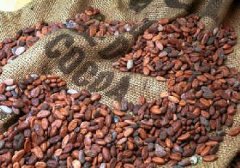
Decaffein, the processing method of low caffeine coffee beans
CO2 low-caffeine treatment and other low-caffeine treatments are described as follows: at present, there are three ways to remove caffeine from coffee beans: 1. Water treatment can remove 9496% of the caffeine. 2. Chemical extraction method, early use of chloroform (Chloroform) and benzene (Benzene) as solvents to extract caffeine, and later understand that these chemicals cause cancer, and then gradually become other low-hazard chemicals.
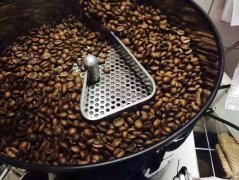
Decaffein, the processing method of low caffeine coffee beans
CO2 low-caffeine treatment and other low-caffeine treatments are described as follows: at present, there are three ways to remove caffeine from coffee beans: 1. Water treatment can remove 9496% of the caffeine. 2. Chemical extraction method, early use of chloroform (Chloroform) and benzene (Benzene) as solvents to extract caffeine, and later understand that these chemicals cause cancer, and then gradually become other low-hazard chemicals.
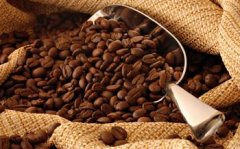
Common sense of Fine Coffee beans Chemical composition of coffee
How many substances does a cup of coffee contain? Coffee extracted by traditional methods such as hand-brewing and Syphone contains more than 200 substances, while 1500 qualities can be extracted in an instant when using a Ruyi coffee machine and mocha pot. Unexpectedly, there are so many things in a cup of flavored water, the charm of coffee is made up of these substances. Coffee beans.

Eastman Tritan polyester powered new coffee machine
Eastman Chemical (Eastman Chemical Company) announced that Hourglass Coffee, based in Portland, Oregon, will use Eastman's Tritan as raw material to produce HourglassCold Brew Coffee systems. Eastman Tritan resin can meet the requirements of tubing toughness, repeated washing durability, heat resistance, chemical resistance and easy processability. Trit
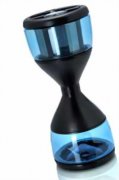
Eastman Tritan polyester powered new coffee machine
Eastman Chemical (Eastman Chemical Company) announced that Hourglass Coffee, based in Portland, Oregon, will use Eastman's Tritan as raw material to produce HourglassCold Brew Coffee systems. Eastman Tritan resin can meet the requirements of tubing toughness, repeated washing durability, heat resistance, chemical resistance and easy processability. Trit

World Coffee Bean Certification What is Organic Coffee Bean? How to properly certify organic coffee beans?
Organic coffee is coffee grown without the use of synthetic pesticides, herbicides or chemical fertilizers. These ways of growing coffee help maintain a healthy environment and keep groundwater pure. After harvesting, be sure to use an organic certified roasting plant to process coffee beans. Organic coffee is coffee beans grown in the shade.
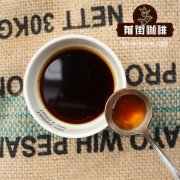
Coffee Science: the Flavor Source and volatility of Coffee
Professional coffee knowledge exchange more coffee bean information please pay attention to the coffee workshop (Wechat official account cafe_style) in a broad sense, taste includes five senses (vision, hearing, smell, taste, touch) transmitted to the cerebral cortex, and handed over to the central nervous system to process, so our five senses will be the medium of taste signals; but in a narrow sense, we usually think that

Coffee dictionaries commonly used coffee terms other coffee words
* Cupping: a way to test the quality of coffee. Basically, put the ground fresh coffee beans in a cup, pour them into hot water and soak them, then scoop them out with a small spoon without filtering. * extraction: the necessary substance is dissolved through a liquid and precipitated. * caffeine: the chemical formula is C8H10N402, the only plant base containing nitrogen, such as refreshing, diuresis and elimination.

Coffee common sense Why is plain coffee bitter?
Today, several friends have expressed to varying degrees that they do not adapt to the bitter taste of pure coffee. I believe many people feel the same way, but why is pure coffee bitter? A seemingly simple problem has been bothering scientists for decades. Now, scientists have narrowed down their research and targeted two chemical molecules. You have a cup of coffee, actually.

How many chemicals are there in a cup of coffee
Coffee flavor chemistry has been studied for more than 200 years. Researchers have been committed to the separation and identification of coffee flavor substances. At present, more than 1000 coffee flavor substances have been reported. People can smell the aroma of coffee, because of the volatility of chemical molecules, the flavor of these chemical molecules is combined to form the taste of coffee. Swiss Federal University of Technology

The effect of caffeine on the Chemical composition of Fine Coffee
Reduced risk according to a new study in the European Journal of Cancer Prevention (European Journal of cancer Prevention), those who drank two or three cups of caffeinated coffee a day were 13% less likely to develop non-malignant skin cancer than those who drank none, and those who drank more than six cups a day were significantly less likely to develop non-malignant skin cancer.

The bitter taste of coffee comes from the processing process.
In western countries, people drink a cup of coffee every morning. In order to protect the bitterness of the coffee, they often add some milk powder and sugar. But why is coffee bitter? A seemingly simple question has plagued scientists for decades.